
Introduction to Aryabhatta Biography
Aryabhatta Biography is broadly noted as one of the finest mathematicians and astronomers of historic India. Born during the Gupta era, frequently known as the Golden Age of India, Aryabhatta’s works had a profound effect on the scientific world, both within the East and the West.
He is quality recognized for composing Aryabhatiya and for introducing key concepts in trigonometry, algebra, mathematics, and astronomy. His correct calculation of π (pi), his concept on the Earth’s rotation, and his explanation of eclipses show a degree of highbrow brilliance a ways before his time.
Early Life and Background
Place of Birth
According to most ancient sources, Aryabhatta was born in 476 CE in Kusumapura, that’s identified with present-day Patna in Bihar, India. However, some texts moreover link him to Ashmaka, a location believed to be a part of present-day Maharashtra or Karnataka.
Education and Learning
Aryabhatta in all likelihood received his education at the historic and prestigious Nalanda University, placed near his birthplace. Nalanda emerged as one of the earliest facilities of higher gaining knowledge in the global. There he might have studied Vedic mathematics, astronomy, common sense, and literature.
He exhibited mathematical genius from a younger age, composing his maximum famous work Aryabhatiya at the age of 23.
Aryabhatta – Wiki Biography Table
| Attribute | Details |
|---|---|
| Full Name | Aryabhatta |
| Year of Birth | 476 CE |
| Place of Birth | Likely Kusumapura (modern-day Patna, Bihar, India) |
| Nationality | Indian |
| Famous For | Mathematics and Astronomy |
| Famous Works | Aryabhatiya, Arya-siddhanta |
| Key Contributions | Value of π (pi), Concept of zero, Earth’s rotation |
| Estimated Year of Death | Around 550 CE |
| Education | Possibly at Nalanda University |
| Influences | Vedic mathematics and ancient Indian astronomy |
| Honors | India’s first satellite (1975) named “Aryabhata” |
| Language Used | Sanskrit |
| Global Influence | India, Islamic World, and Europe |
Aryabhatiya – The Masterpiece
Aryabhatta’s most essential art work is the Aryabhatiya, completed in 499 CE, the identical 12 months he became 23. Written in Sanskrit in verses (shlokas), this painting carries a complete 121 stanzas unfold at some stage in 4 chapters.
The Four Sections of Aryabhatiya
- Gitikapada – Discusses big gadgets of time and cosmology.
- Ganitapada – Covers mathematics which includes arithmetic, geometry, and algebra.
- Kalakriyapada – Talks approximately time reckoning and planetary calculations.
- Golapada – Addresses spherical astronomy.
Each of those sections consists of a complicated system, defined using rhythmic verse for clean memorization.
Mathematical Contributions of Aryabhatta
The Concept of Zero and Decimal System
While Aryabhatta did not invent the image ‘0’, he changed into the first to use a positional numeral gadget, making the concept of 0 operational. His use of area values have become vital inside the evolution of the decimal gadget, which makes office work the basis of modern computing and arithmetic.
Calculation of Pi (π)
Aryabhatta approximated π (pi) as 3.1416, an outstanding accuracy for his time.
He wrote: “Add four to one hundred, multiply by 8, after which add 62,000. The result is approximately the circumference of a circle whose diameter is 20,000.”
This gives π ≈ 3.1416, correct to four decimal locations, longer in advance than European college students.
Trigonometry Pioneering
- Introduced the ideas of jya (sine), kojya (cosine), utkrama-jya (versed sine).
- Constructed a trigonometric table in steps of three.75 degrees.
- Developed techniques for calculating the region of triangles and circles, and volume of spheres and pyramids.
Algebra and Arithmetic
- Provided solutions for quadratic equations.
- Used the kuttaka technique for solving indeterminate equations.
- Found mathematics collection and algebraic identities used in recent times.
Astronomical Contributions of Aryabhatta
Rotation of the Earth
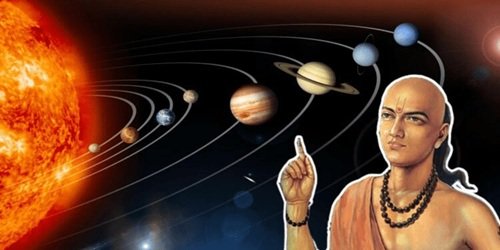
One of Aryabhatta’s most profound contributions turned into the announcement that the Earth rotates on its axis. At a time at the same time as people believed the sky circled, Aryabhatta proposed the current concept that day and night time arise due to Earth’s private rotation, no longer due to the fact the Sun acts around it.
Solar and Lunar Eclipses
He debunked superstitions that blamed Rahu and Ketu for eclipses. Instead, he scientifically described:
- Lunar Eclipse happens while Earth’s shadow falls on the Moon.
- Solar Eclipse takes place whilst the Moon obstructs daylight hours from reaching Earth.
Length of the Year
Aryabhatta calculated the period of the sidereal year as 365.25868 days – a remarkably accurate value, off by manner of without a doubt three mins and 20 seconds from in recent times’s ordinary cost of 365.25636 days.
Age and Death of Aryabhatta
Aryabhatta is assumed to have lived until approximately 550 CE, passing away at the age of spherical seventy 4. The place and reason of his dying stay are unsure, though it’s widely believed he lived and taught in Pataliputra (Patna) until his very last years.
Net Worth of Aryabhatta
In historical India, wealth changed into not measured in current-day monetary terms, and Aryabhatta became a student, no longer a merchant or king. Thus:
- Net actually worth: Not Applicable
- His real wealth comes to be in information, legacy, and his everlasting contribution to humanity.
Legacy and Global Influence
🇮🇳 Indian Legacy
- Revered because the “Father of Indian Mathematics”
- India’s first satellite tv for computer, launched in 1975, become named “Aryabhata”
- The Aryabhatta Research Institute for Observational Sciences (ARIES) have become established in his honor
Global Influence
- His works have been translated into Arabic and encouraged Islamic mathematicians like Al-Khwarizmi.
- Ideas spread to Europe through Arabic texts, influencing European Renaissance thinkers.
Aryabhatta’s Philosophical Beliefs
Aryabhatta believed that mathematics is the essence of all natural phenomena. He emphasised empirical observations over fables, and believed technological understanding should offer a cause of nature, now not support superstition.
He as soon as wrote:
“Knowledge is that which is well-known to the unknown.”
Timeline of Aryabhatta Life
| Year | Age | Event / Milestone | Details |
|---|---|---|---|
| 476 CE | 0 | Birth of Aryabhatta | Born in Kusumapura (modern-day Patna, Bihar), in the Gupta Empire. |
| ~490 CE | ~14 | Early Education Begins | Likely started studying Vedic texts, mathematics, and astronomy; possibly at Nalanda University. |
| 499 CE | 23 | Completion of Aryabhatiya | Wrote the Aryabhatiya, his most famous work on mathematics and astronomy. |
| 500 CE | 24 | Gained Recognition | Became a renowned scholar across India, receiving acknowledgment from Gupta rulers. |
| 502–510 CE | 26–34 | Head of an Observatory | Believed to have led an astronomical observatory in Kusumapura or Ujjain. |
| ~510–520 CE | ~34–44 | Developed Arya-siddhanta | Composed the now-lost Arya-siddhanta, with deeper astronomical observations. |
| Post 520 CE | 45+ | Widespread Influence | His ideas were translated into Arabic and Persian, influencing Islamic and European scholars. |
| ~550 CE | ~74 | Death (Estimated) | Likely passed away around 550 CE. Exact year and location unknown. |
Read More: Shivani Kumari Biography, Age, Family, Lifestyle, Career, Net Worth,
Frequently Asked Questions (FAQs)
Q2. What is Aryabhatiya?
Aryabhatiya is Aryabhatta’s seminal e-book, finished in 499 CE, containing 121 Sanskrit shlokas explaining his theories in arithmetic and astronomy.
Q3. Did Aryabhatta invent 0?
While he no longer used the photo '0, Aryabhatta developed the location value device, laying the muse for the concept of 0.
Q4. How did Aryabhatta calculate pi?
He approximated π (pi) as three.1416, remarkably correct for the time, the usage of a geometric technique defined in verse.
Q5. How did Aryabhatta provide a reason behind eclipses?
He explained that eclipses get up due to Earth and Moon’s shadows, rejecting legendary beliefs concerning Rahu and Ketu.
Conclusion:
Aryabhatta legacy transcends time and geography. His works have been a long way in advance of his era, tough winning myths and changing them with clinical motives rooted in logic and remark. In an international nevertheless, greedy at the stars via folklore, he introduced technological recognition-a way to the skies. Even nowadays, engineers, astronomers, and mathematicians assemble on his theories. From classrooms in India to observatories in Europe, Aryabhatta’s call maintains to encourage generations to search out understanding, discover the cosmos, and assume seriously.
Disclaimer
The information provided in this article about Aryabhatta is based on historical records, scholarly interpretations, and available sources. While efforts have been made to ensure accuracy, some details may be subject to debate or interpretation. This content is for educational and informational purposes only.